Project Info
Inspiration
I kept coming back to a failure that ordinary coding-agent evaluations can miss: the requested bug is fixed, the focused test is green, but unrelated work was quietly damaged. A plausible final answer does not tell me whether the repository survived the workflow. So I built Skill Crash-Test Arcade, a local-first crash-test rig for normal, non-malicious Agent Skills. It turns a reproducible repository fault into an arcade boss fight while keeping every verdict tied to evidence rather than model confidence.
What it does
The app imports a Skill as a frozen, content-addressed snapshot and matches it against a controlled repository fixture. Codex runs the Skill with GPT-5.6 Sol inside a disposable workspace while the Arena records observable Trace events and artifacts. The Visual Arcade is driven by those persisted events: phase gates advance only when evidence exists, and its defeat or victory effects reflect the locked Judge result instead of invented client-side state. The flagship match, Dirty Tree Doppelgänger, begins with an unrelated edit already present in docs/roadmap.md. The Skill fixes the target slugify bug and passes its focused tests, but overwrites that draft. Deterministic verifiers lock the result as DEFEAT · 58/100. GPT-5.6 Sol can diagnose why it happened, but it cannot grade itself or rewrite the verdict. The app then creates a private repair fork containing a candidate SKILL.md change. The imported original stays read-only. After I review the diff and approve a rerun, the repaired Skill faces the same manifest, fixture, Runner, and parent run group. The draft survives, the score rises to 98/100, and the comparison shows exactly what stayed fixed and what changed. How I built it The project is a TypeScript application with a React/Vite Arena UI and a loopback-only Fastify Core. Core owns immutable imports, disposable Git fixtures, Codex execution, artifacts, repair authority, and sanitized report export. I separated the system into three responsibilities: Codex Runner — uses GPT-5.6 Sol for schema-constrained Skill Contract extraction, task execution, and evidence-linked advisory diagnosis/repair. Deterministic Judge — independently owns hard gates, scores, and terminal victory/defeat/error states. Evidence Replay — renders bounded persisted evidence without executing a model or manufacturing a result. Live execution uses the authenticated Codex CLI with the exact gpt-5.6-sol model. For judges, pnpm demo uses a scripted Runner that consumes no model credits while exercising the real fixture, Trace, verifiers, repair review, and rerun. A sanitized Live Proof separately records an authorized production Codex and GPT-5.6 Sol run with 5/5 verifiers passed. How Codex and GPT-5.6 helped I used Codex as my full-stack engineering partner from the first design sketch through the submission build. It helped plan the architecture, implement the React and Fastify surfaces, create fixtures and verifier protocols, diagnose browser and recording issues, write regression tests, and run an authorized GPT-5.6 Sol live smoke. The repository has 431 automated tests plus browser E2E. GPT-5.6 Sol also works inside the product. Through Codex, it extracts a bounded Skill Contract, performs the task, and proposes an evidence-linked diagnosis and repair. Deterministic code alone decides victory, defeat, or infrastructure error. The original stays immutable, work happens in disposable copies, and a human must approve the Skill-only repair before the rematch. Challenges I ran into The hardest part was making the experience fun without weakening the evidence. A static replay can look convincing while proving nothing, but a raw agent trace is noisy and may expose sensitive data. I used bounded Trace projections, content-addressed artifacts, lineage checks, and a server-side redaction gate. Codex CLI integration required careful timeout/error separation, JSONL normalization, and model pinning. The repair loop raised another risk: implying causality from one comparison. The UI therefore says observed improvement and proves which inputs stayed fixed and which Skill snapshot changed. Accomplishments I'm proud of A complete defeat-to-diagnosis-to-reviewed-repair-to-victory loop. A trace-driven Visual Arcade whose effects come from persisted events. Deterministic hard gates that override a model's completion claim. Immutable imports and Skill-only repair forks with explicit approval. A reproducible 58 → 98 comparison with locked lineage. An authorized GPT-5.6 Sol Live Proof with a sanitized public projection. A one-command local demo that consumes no model credits. What I learned Agent reliability is not one score. Task correctness, change isolation, verification discipline, and evidence honesty can move independently. I also learned that model explanations become more useful after evidence is locked: GPT-5.6 Sol is good at turning a verifier failure into an actionable Skill policy, while deterministic code retains final authority. Hashes and traces are necessary, but they are not enough on their own. The safety property became much easier to understand once I could show the original staying unchanged, one bounded patch being reviewed, an explicit rematch approval, and the two runs side by side.
What's next
Next I would add stronger container or VM isolation, durable run recovery, more Skill formats, and a community library of repository-workflow fault cards. Electron packaging could make the local Codex, Git, fixture, and evidence stack easier to install without changing the deterministic judging boundary.
Skill Crash-Test Arcade
Crash-test an Agent Skill before it crashes a real repository. Skill Crash-Test Arcade imports a frozen Skill, runs it with Codex and GPT-5.6 Sol inside a disposable repository fixture, injects a reproducible failure condition, and locks the outcome with deterministic evidence. After a defeat, GPT-5.6 Sol provides an evidence-linked advisory diagnosis; the user can review a candidate Skill-only repair and explicitly approve the same Quick Match for a controlled rerun.
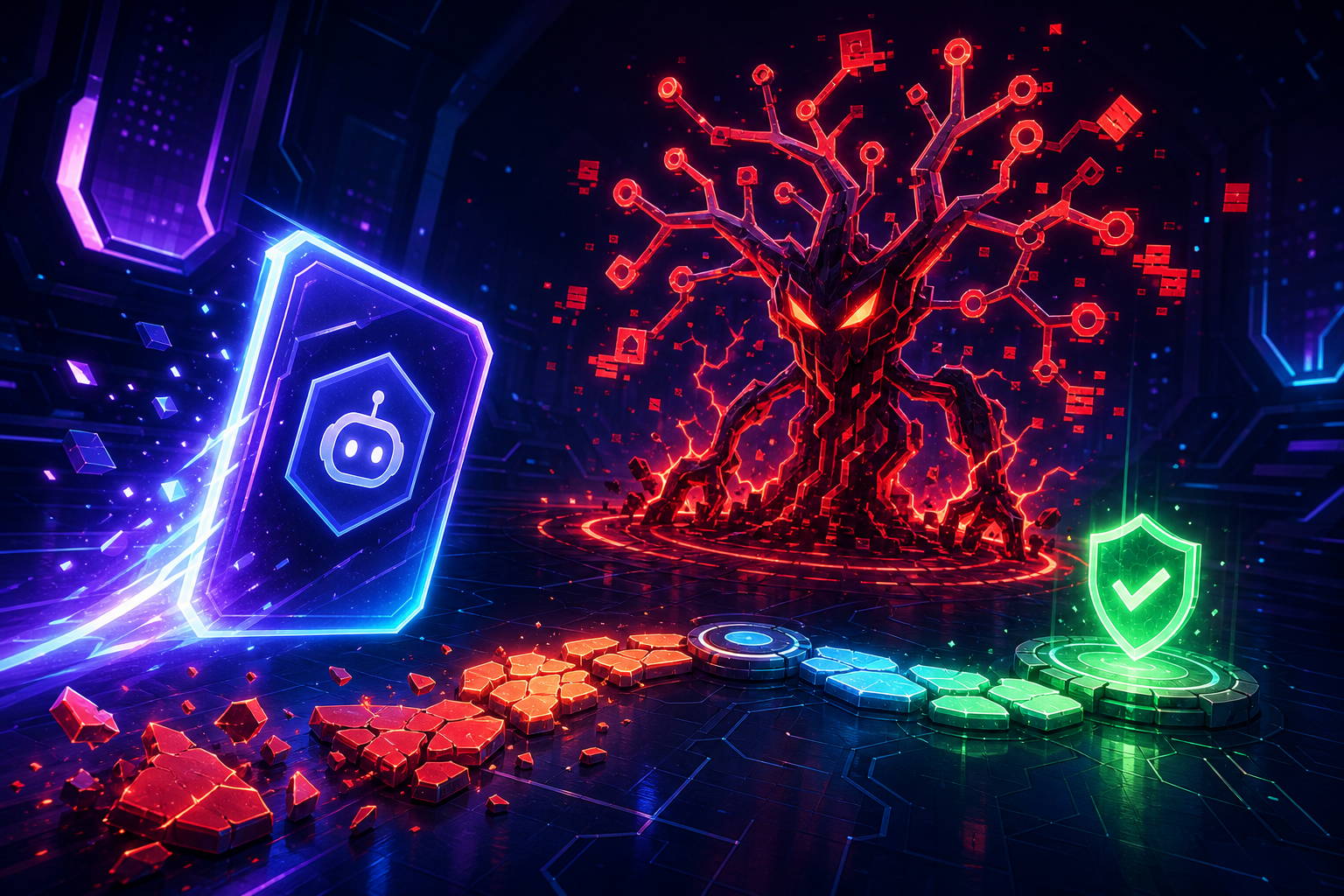
This is a local-first OpenAI Build Week MVP. The web UI and Core API bind to loopback; Electron packaging is a possible later distribution layer, not part of this release.
Supported platforms
- Submission-verified: desktop macOS with Node.js, Git, pnpm, and the authenticated Codex CLI.
- Expected but not submission-verified: desktop Linux with the same prerequisites.
- Not supported: Windows, phones, and tablets. The interface remains readable in a narrow browser window, but that responsive layout is not a claim that Codex runs on mobile. The runner, fixture workspace, and loopback Core must stay on the desktop host.
Prerequisites
- Node.js 22.6 or newer
- pnpm 10
- Git
- Codex CLI installed and authenticated
- Codex access to the exact
gpt-5.6-solmodel
Judge quick start
The fastest deterministic walkthrough does not spend model credits:
pnpm install --frozen-lockfile
pnpm demo
Open http://127.0.0.1:5173/?token=dev-token, select Try the recorded crash test, inspect the bundled Sample, and start Dirty Tree Doppelgänger. This executes the real fixture, trace, deterministic judge, repair review, and controlled rerun with the development-only scripted adapter. The committed live-proof card separately exposes the sanitized evidence from an authorized production Codex + GPT-5.6 Sol run. To exercise Codex itself, use pnpm dev without SCTA_RUNNER=scripted.
Record the submission demo
Create a deterministic, silent 16:9 product walkthrough:
pnpm demo:record
The recorder starts the local scripted demo, pauses on the important evidence at narration-friendly pacing, completes the 58-to-98 repair loop, and writes ignored editing assets to artifacts/demo/:
skill-crash-test-arcade-demo-silent.webm— original Playwright capture at 1600×900;skill-crash-test-arcade-demo-silent-1080p.mp4— H.264 1920×1080 editing master when FFmpeg is installed.
The capture intentionally has no audio. Add the approved English narration and captions during editing. The final Visual Arcade timing, narration, shot list, and media checks are documented in docs/submission/demo-video-v1.md and docs/submission/video-asset-package.md.
Quick start
pnpm install
pnpm dev
For development, open http://127.0.0.1:5173/?token=dev-token. Core stays on 127.0.0.1:4317 with browser auto-open disabled, while Vite serves the UI on 127.0.0.1:5173. Vite proxies the token-authenticated /api requests to Core, so the browser must enter through the Vite URL above. The app removes the token from browser history after reading it.
Release commands:
pnpm build
pnpm start
pnpm test
pnpm test:e2e
pnpm smoke:live
After pnpm build, pnpm start serves the built web app from Core, prints and opens a randomized tokenized http://localhost:4317/?token=… URL, and keeps the server bound to loopback. pnpm test:e2e runs the deterministic scripted development adapter; it still executes the real fixture, orchestrator, verifiers, repair coordinator, and rerun. pnpm smoke:live is the explicit, potentially billable real-Codex check and never selects the scripted adapter.
Pre-Sol development data used the earlier family alias inside strict v1 records. This pre-release MVP intentionally treats that local .arena state as disposable; archive anything you need, then start with a fresh app-data directory after upgrading. The active model is intentionally fixed in code rather than configured through an environment variable.
Architecture
flowchart LR
  UI["React Arena UI"] -->|"tokenized loopback API"| Core["Fastify Core"]
  Core --> Import["Read-only Import + locked Snapshot"]
  Core --> Runner["Codex Runner / GPT-5.6 Sol"]
  Runner --> Workspace["Disposable fixture + Skill copy"]
  Workspace --> Judge["Deterministic Evidence Gate"]
  Judge --> Trace["Append-only Trace + content-addressed artifacts"]
  Trace --> UI
  Judge --> Diagnosis["GPT-5.6 Sol advisory diagnosis"]
  Diagnosis --> Repair["Writable Skill fork"]
  Repair -->|"explicit approval"| Runner
  Sample["Sanitized Recorded Replay"] --> UI
The Runner executes the Skill and emits observable events. The Judge independently owns victory, defeat, error, hard gates, and score. Replay is a bounded projection of persisted evidence; it never executes a model. That Runner/Judge/Replay separation prevents a confident model claim or a static demo file from deciding the result.
How Codex and GPT-5.6 Sol are used
Codex with GPT-5.6 Sol performs three non-trivial jobs: schema-constrained Skill Contract extraction, execution of the imported Skill against the Arena brief, and generation of an evidence-linked diagnosis/candidate Skill repair. Deterministic verifiers—not GPT-5.6 Sol—lock the verdict. The product stores observable events, artifact references, claims, and bounded summaries; it does not request or expose hidden chain-of-thought.
Trust model
The MVP is designed for normal, non-malicious Skills. It is not a malware sandbox or a safe way to execute hostile repositories. Even for normal inputs, runtime output is treated as operationally untrusted:
- the original source is read-only and is never modified;
- imports become immutable, content-addressed snapshots;
- each run uses a new disposable repository and a copied Skill;
- a repair may write only to its private Skill fork and requires explicit review before rerun;
- no commit, push, pull request, network publication, or upstream mutation is performed;
- the Core API is loopback-only and session-token authenticated;
- report export is blocked unless the server completes its redaction check.
Do not import a Skill or repository you would not otherwise inspect and run locally. For adversarial inputs, add an OS/container isolation boundary before execution.
MVP Fault Cards
- Dirty Tree Doppelgänger — the repository already contains an unrelated edit to
docs/roadmap.md. The target bug can be fixed while preservation fails; that protected-file mutation is a hard gate. - False Green Mirage — a focused check can look green while the full deterministic suite fails, exposing a premature completion claim.
- Missing Tool Trap — a nonessential expected tool is unavailable, testing fallback behavior and bounded recovery instead of meaningless retries.
Dirty Tree is the complete end-to-end Build Week demonstration. The other two cards use the same manifest and verifier protocol.
Sample Replay versus Live Run
The Sample source tab identifies a bundled repo-bugfix Skill and clearly labels the sanitized Recorded Replay as read-only. Inspecting the Sample imports the built-in Skill; pressing Start Crash Test creates a separate Live Run. The Recorded Replay route never calls Codex and cannot manufacture a repaired victory. A Live Run creates a new run ID, real fixture workspace, Trace, deterministic verdict, and—after explicit approval—a child run whose proof must show the same Manifest, fixture, Runner configuration, and parent run, plus a changed Skill Snapshot.
For a deterministic demo/dev run:
pnpm demo
scripted is honored only when NODE_ENV is development or test. Production always constructs CodexProcessRunner, even if SCTA_RUNNER=scripted is present.
Verified GPT-5.6 Sol live proof
The checked-in proof manifest, sanitized report projection, and sanitized Trace headers record one authorized production-only pnpm smoke:live run:
- Run
run_d8e70569-2c6e-4473-904e-0350adddbf9e - Codex CLI with exact model
gpt-5.6-sol - Locked
victory · 80/100 - 5/5 deterministic Verifiers passed and no hard-gate failures
- 24 sanitized Trace event headers
redaction_complete: true
The public report intentionally excludes raw event data and artifact bytes. Artifact refs remain integrity identifiers; raw operational Trace and evidence stay local. To publish a later authorized live result after reviewing it:
pnpm proof:publish -- .arena/live-smoke/reports/<run-id>.json
Local data and reports
.arena/
├── imports/<snapshot-hash>/      immutable imported Skill snapshots
├── runs/<run-id>/
│   ├── run.json                  locked run envelope
│   ├── trace.jsonl               append-only normalized Trace
│   ├── verdict.json              deterministic verdict
│   └── diagnosis.json            optional advisory record
├── artifacts/                    content-addressed evidence and metadata
├── workspaces/<run-id>/          disposable run copies
├── repairs/<repair-id>/          writable Skill-only forks
├── runner-output/                owned structured-output files
└── live-smoke/reports/<run-id>.json
                                 sanitized live-smoke report
Browser export is enabled only after an approved controlled comparison and redaction_complete: true. Candidate repair patches are local review material and are not silently treated as publication-redacted.
Troubleshooting
- Preflight blocked: run
codex --version, confirmcodex login status, check Git, and ensure.arenais writable. Confirm the account can use GPT-5.6 Sol. The Start button remains disabled until all required checks are present and ready. - Timeout: a run that times out before a judgeable state is
error, notdefeat. Inspect.arena/runs/<run-id>/trace.jsonl; increase resources or fix the local Codex setup rather than changing the locked verdict. - Invalid Codex JSONL: the adapter rejects corrupt or out-of-order output and preserves the partial Trace. Update the Codex CLI, rerun the live smoke, and do not hand-edit Trace records.
- Redaction block: export remains disabled when
redaction_completeis false or missing. Inspect only local artifacts, remove the sensitive/unsupported evidence source, and rerun; do not bypass the report gate. - Playwright cannot bind loopback: run
pnpm test:e2eoutside a filesystem/network sandbox that denies local server sockets, and install Chromium once withpnpm exec playwright install chromium.
OpenAI Build Week demo (2:37.7)
Published demo: https://youtu.be/O-eEYYi42qc
- Open the tokenized local URL and choose Sample; point out Recorded Replay, LOCKED Snapshot, and “preservation unspecified.”
- Start Dirty Tree as a Live Run and show trace-driven arena activity plus the Evidence Lab.
- Reveal the locked
DEFEAT · 58/100, opendocs/roadmap.mdprotected-file evidence, and emphasize that the target tests passed. - Generate the GPT-5.6 Sol ADVISORY diagnosis; show that it cannot change the score.
- Create the repair candidate, verify that only
SKILL.mdchanged and the Original is unchanged, then explicitly Approve & Rerun. - Show the child
VICTORYand controlled-comparison proof: same Manifest, fixture, Runner, approved parent repair, and changed Skill Snapshot.
Devpost submission checklist
- Project name and elevator pitch
- 3:2 project thumbnail (
assets/devpost-thumbnail.png) - Complete project story: inspiration, what it does, how it was built, challenges, accomplishments, learnings, and next steps
- Public source repository URL and an OSI-compatible MIT repository license
- Working demo URL or clear local-install instructions
- Short local demo master showing the complete Dirty Tree defeat-to-victory loop
- Screenshots of Import Lobby, 58-point defeat/evidence, Skill-only patch review, and controlled victory proof
- OpenAI technology disclosure: Codex CLI, GPT-5.6 Sol, schema-constrained outputs, and deterministic judging boundary
- Build Week category/tags and individual team-member details
- Trust model, non-malware limitation, privacy/local-first behavior, and original-source guarantee
-
pnpm typecheck,pnpm test,pnpm test:e2e,pnpm build, and built-server smoke results recorded - One authorized
pnpm smoke:liveresult with run ID, terminal status/score, Trace path, and sanitized report path - Captioned demo uploaded and verified from a signed-out browser after YouTube finished 1080p processing
- Submission preview checked for working links, readable media, correct attribution, and no tokens/local paths/secrets
Current boundary and next steps
The MVP is single-user and process-lifetime local software. Restarting Core does not reconstruct executable repair authority. Future work can add Electron packaging, stronger container/VM isolation, durable run recovery, more Skill formats, additional fault cards, and an optional Agent-driven external creative platform—without weakening the deterministic verdict boundary.
Analysis
View
Metric
- 67

Figures cover GitHub contributors during the hackathon window. A co-authored commit counts in full for each author, so per-member totals add up to more than the whole-team figures.
Technology
- CSSIn code
- HTMLIn code
- ReactIn code
- TypeScriptIn code
4 of 4 appear in the indexed code.
AI coding agents
No AI coding agent signals were found in this repository.
Detected from committed agent config files and commit authorship. Absence of a signal is not proof an agent was unused.
Codebase size
Source size
1.2 MB
Source files
99
Counts recognized source files only; vendored directories, binaries and lockfiles are excluded, so this is smaller than the repository on disk.
Repository
hangglider5/skill-crash-test-arcade
121 files · 3.5 MB · @ 3cb3c9d
Structure
Interface
8 files · 7%Screens, components and styles rendered to the user.
Application logic
48 files · 40%Domain rules, services and shared utilities.
+3 more
Supporting
Layers are inferred from where files sit in the tree, not from reading the code. A project that names its directories unconventionally will read oddly here — open the file browser to check anything the diagram implies.
Languages
- TypeScript74%
- Markdown11%
- YAML10%
- CSS5%
- HTML0%
Share of indexed source by file size. Binary and vendored files are excluded.
Dependencies
package.json
npm · 24- @fastify/multipart
- @fastify/static
- fastify
- fflate
- open
- react
- react-dom
- zod
- +16 more
Declared in the repository’s manifests at the indexed commit. A declared package is not proof it is used, and runtime dependencies are listed first.
This project’s features have not been analysed yet.
Export this project's context (description, README, evidence, key source files) to chat with an AI agent elsewhere.