Project Info
Inspiration
In an era where security cameras are everywhere but meaningful surveillance is scarce, we saw an opportunity to transform passive recording systems into intelligent security guardians. Our inspiration came from real-world incidents where crucial moments were missed despite having camera coverage, and the overwhelming challenge security personnel face in monitoring multiple video feeds simultaneously. We wanted to create a solution that doesn't just record but understands, analyzes, and acts, whether it's for local businesses like grocery markets to bigger organizations like hospitals and shopping malls.
What it does
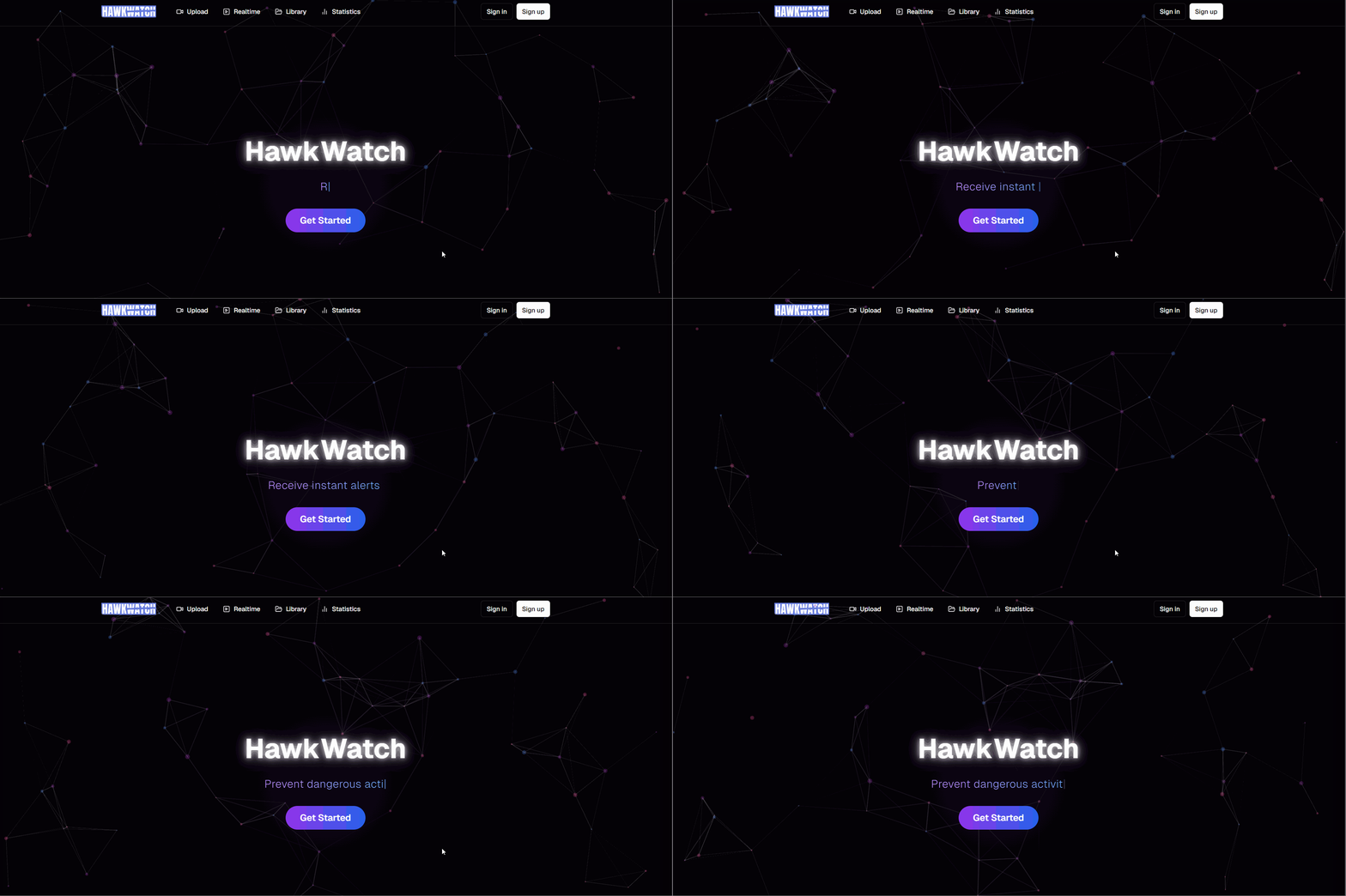
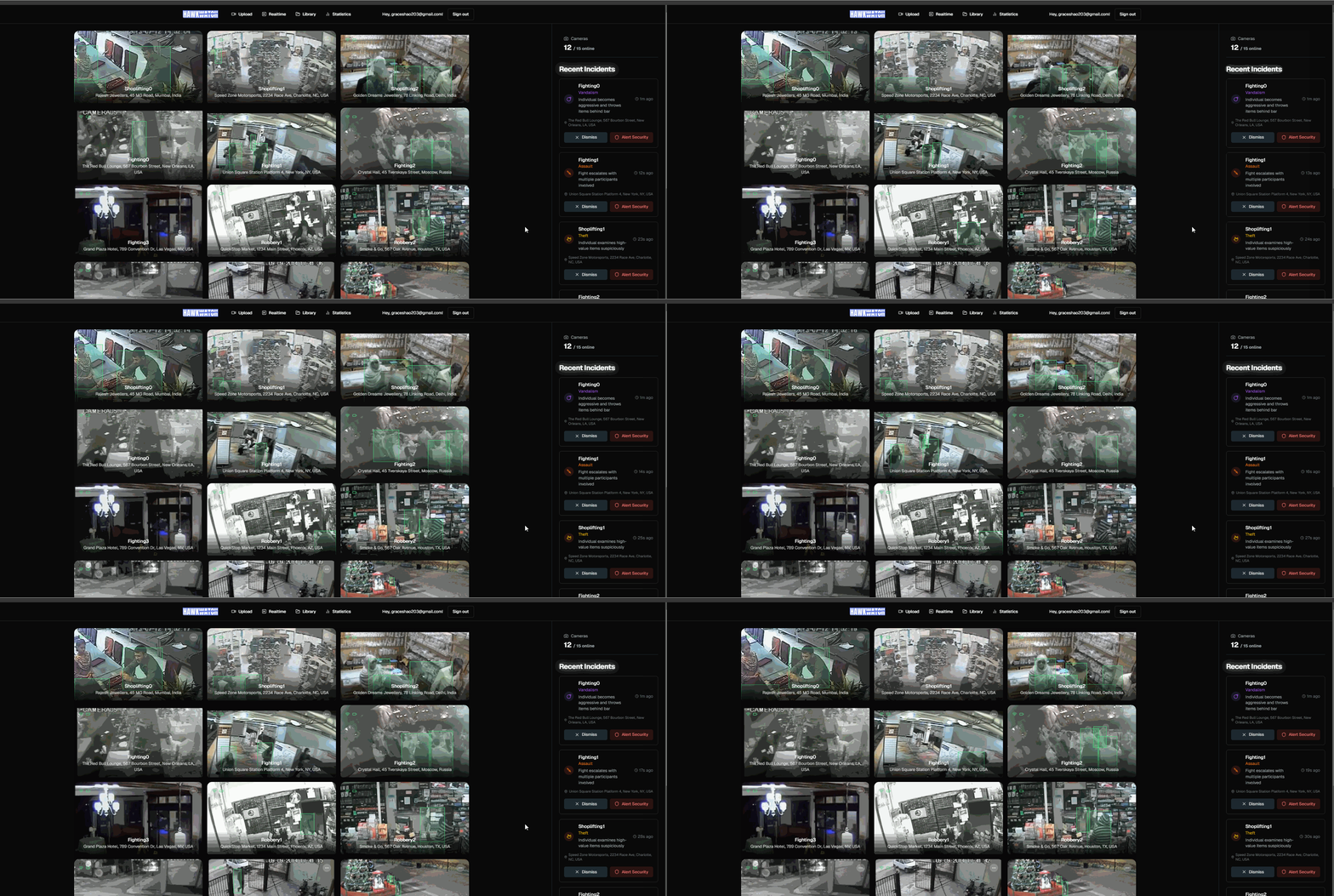
HawkWatch is an intelligent video surveillance platform that detects crime, suspicious activities and life threatening events such as fainting and choking and sends phone alerts to alert security of the issue. Our intelligent model generates time-stamped incident reports with video evidence. It has 4 main features: Real-time detection of dangerous activity is done by sending audio, video, and Tensorflow's body position data to Google's Gemini Visual Language Model, and sending email notification if needed An upload feature allows existing mp4 files to be analyzed A library of saved livestream footage and mp4 uploads, with detailed security analysis complete with timeline and information which is saved with each entry Statistics page which offers an AI summary, chart analysis, and the option to export situation data to CSV. Additional features Sends instant alerts to security through email/phone notifications set Provides an intuitive dashboard for monitoring multiple cameras, with option to call security Ability to download archive footage to MP4 Offers an OpenAI powered assistant that provides contextual support. The bot is fed real-time information about the ongoing event and can respond to user queries, such as "What should I do in this situation" if someone has passed out, helping with quick context-aware advice Offers both real-time streaming and uploaded video analysis
How we built it
Our tech stack combines modern tools for a robust, scalable solution: Frontend: The UI is built with Next.js 13+ and TypeScript, paired with Tailwind CSS for a sleek, responsive design. This ensures a seamless experience for users across different devices. Backend: We use Supabase for secure user authentication and database management, allowing for easy access control and efficient data handling. AI Processing: HawkWatch uses Google's Gemini Visual Language Model (VLM) for real-time video analysis and TensorFlow.js for processing video streams on the client side. These models enable accurate event detection, ranging from criminal activity to health-related emergencies. Email/Phone Service: Resend API powers our email and phone notification system, ensuring that alerts are sent in real-time with minimal delays. Real-time Updates: We leverage the Canvas API for live updates, ensuring that HawkWatch’s real-time analysis is fast and accurate, even as it processes multiple video streams. Contextual Assistance: OpenAI’s language models are integrated to power our assistant bot, which helps security teams with situational guidance. The bot uses context from the most recent events to offer real-time advice, improving the decision-making process during critical moments.
Challenges we ran into
Performance Optimization: Balancing real-time video processing with browser performance and Gemini rate limits AI Model Accuracy: Fine-tuning detection algorithms to minimize false positives Video Stream Handling: Managing multiple video streams without overwhelming the system
Accomplishments we're proud of
Created a fully functional AI surveillance system in 36 hours Achieved real-time processing with minimal latency Implemented a beautiful, intuitive user interface Built a scalable architecture that can handle multiple cameras Developed a system that's accessible through any modern browser
What we learned
Advanced video processing techniques in the browser Real-time data handling with WebSocket connections to handle real-time updates effectively AI model optimization for edge cases Complex state management in React applications, especially when dealing with large datasets Integration of multiple third-party services The importance of user experience in security applications
What's next
Future enhancements we're planning: 1. Advanced AI Features Person identification and recognition Object tracking across multiple cameras Behavioral pattern analysis 2. Enhanced Security End-to-end encryption GDPR compliance tools Advanced access control 3. Smart Home Integration Integration with popular smart home platforms Automated response actions Voice assistant compatibility Our vision is to make HawkWatch the go-to platform for intelligent video surveillance, making security monitoring more efficient and effective for everyone.
HawkWatch - AI-Powered Security Surveillance
Inspiration
In an era where security cameras are everywhere but meaningful surveillance is scarce, we saw an opportunity to transform passive recording systems into intelligent security guardians. Our inspiration came from real-world incidents where crucial moments were missed despite having camera coverage, and the overwhelming challenge security personnel face in monitoring multiple video feeds simultaneously. We wanted to create a solution that doesn't just record but understands, analyzes, and acts, whether it's for local businesses like grocery markets to bigger organizations like hospitals and shopping malls.
What it does
HawkWatch is an intelligent video surveillance platform that detects crime, suspicious activities and life threatening events such as fainting and choking and sends phone alerts to alert security of the issue. Our intelligent model generates time-stamped incident reports with video evidence. It has 3 main features:
- Real-time analysis of video streams using Google's Gemini Visual Language Model
- An upload feature that uploads an existing mp4 file for crime analysis
- A library of saved livestream footage and mp4 uploads, with detailed security analysis complete with timeline and information which is saved with each entry
Additional features
- Sends instant alerts to security through email/phone notifications
- Provides an intuitive dashboard for monitoring multiple cameras
- Offers an OpenAI powered assistant that provides contextual support. The bot is fed real-time information about the ongoing event and can respond to user queries, such as "What should I do in this situation" if someone has passed out, helping with quick context-aware advice
- Offers both real-time streaming and uploaded video analysis
- Statistics page which offers an AI summary, chart analysis, and the option to export to CSV.
How we built it
Our tech stack combines modern tools for a robust, scalable solution:
- Frontend: The UI is built with Next.js 13+ and TypeScript, paired with Tailwind CSS for a sleek, responsive design. This ensures a seamless experience for users across different devices.
- Backend: We use Supabase for secure user authentication and database management, allowing for easy access control and efficient data handling.
- AI Processing: HawkWatch uses Google's Gemini Visual Language Model (VLM) for real-time video analysis and TensorFlow.js for processing video streams on the client side. These models enable accurate event detection, ranging from criminal activity to health-related emergencies.
- Email/Phone Service: Resend API powers our email and phone notification system, ensuring that alerts are sent in real-time with minimal delays.
- Real-time Updates: We leverage the Canvas API for live updates, ensuring that HawkWatch’s real-time analysis is fast and accurate, even as it processes multiple video streams.
- Contextual Assistance: OpenAI’s language models are integrated to power our assistant bot, which helps security teams with situational guidance. The bot uses context from the most recent events to offer real-time advice, improving the decision-making process during critical moments.
Challenges we ran into
- Performance Optimization: Balancing real-time video processing with browser performance and Gemini rate limits
- AI Model Accuracy: Fine-tuning detection algorithms to minimize false positives
- Video Stream Handling: Managing multiple video streams without overwhelming the system
Accomplishments that we're proud of
- Created a fully functional AI surveillance system in 36 hours
- Achieved real-time processing with minimal latency
- Implemented a beautiful, intuitive user interface
- Built a scalable architecture that can handle multiple cameras
- Developed a system that's accessible through any modern browser
What we learned
- Advanced video processing techniques in the browser
- Real-time data handling with WebSocket connections to handle real-time updates effectively
- AI model optimization for edge cases
- Complex state management in React applications, especially when dealing with large datasets
- Integration of multiple third-party services
- The importance of user experience in security applications
What's next for HawkWatch
Future enhancements we're planning:
1. Advanced AI Features
- Person identification and recognition
- Object tracking across multiple cameras
- Behavioral pattern analysis
2. Enhanced Security
- End-to-end encryption
- GDPR compliance tools
- Advanced access control
3. Smart Home Integration
- Integration with popular smart home platforms
- Automated response actions
- Voice assistant compatibility
Our vision is to make HawkWatch the go-to platform for intelligent video surveillance, making security monitoring more efficient and effective for everyone.
Analysis
View
Metric
- 36
- 19
- 18
- 9


Figures cover GitHub contributors during the hackathon window. A co-authored commit counts in full for each author, so per-member totals add up to more than the whole-team figures.
Technology
- CSSIn code
- Google GeminiIn code
- JavaScriptIn code
- Next.jsIn code
- OpenAIIn code
- PythonIn code
- ReactIn code
- SupabaseIn code
- Tailwind CSSIn code
- TypeScriptIn code
- VercelIn code
- TensorFlowClaimed
11 of 12 appear in the indexed code. 1 claimed on Devpost could not be matched to code, which may simply mean the tool leaves no trace in the repository.
AI coding agents
No AI coding agent signals were found in this repository.
Detected from committed agent config files and commit authorship. Absence of a signal is not proof an agent was unused.
Codebase size
Source size
234 KB
Source files
91
Counts recognized source files only; vendored directories, binaries and lockfiles are excluded, so this is smaller than the repository on disk.
Repository
Grace-Shao/Treehacks2025
132 files · 40.6 MB · @ de00cc1
Structure
Interface
67 files · 51%Screens, components and styles rendered to the user.
+6 moreAPI & routing
5 files · 4%Request entry points: routes, handlers and controllers.
Application logic
7 files · 5%Domain rules, services and shared utilities.
Data & schema
4 files · 3%Schema definitions, migrations and data access.
Supporting
Layers are inferred from where files sit in the tree, not from reading the code. A project that names its directories unconventionally will read oddly here — open the file browser to check anything the diagram implies.
Languages
- TypeScript93%
- Python4%
- Markdown2%
- CSS1%
- JavaScript0%
Share of indexed source by file size. Binary and vendored files are excluded.
Dependencies
package.json
npm · 48- @google-cloud/video-intelligence
- @google/generative-ai
- @radix-ui/react-checkbox
- @radix-ui/react-dialog
- @radix-ui/react-dropdown-menu
- @radix-ui/react-label
- @radix-ui/react-progress
- @radix-ui/react-slot
- @supabase/ssr
- @supabase/supabase-js
- @tanstack/react-table
- @tensorflow-models/blazeface
- @tensorflow-models/pose-detection
- @tensorflow/tfjs
- @types/classnames
- @types/nprogress
- @vercel/blob
- autoprefixer
- +30 more
scripts/requirements.txt
pypi · 1- google-generativeai
Declared in the repository’s manifests at the indexed commit. A declared package is not proof it is used, and runtime dependencies are listed first.
This project’s features have not been analysed yet.
Export this project's context (description, README, evidence, key source files) to chat with an AI agent elsewhere.